story
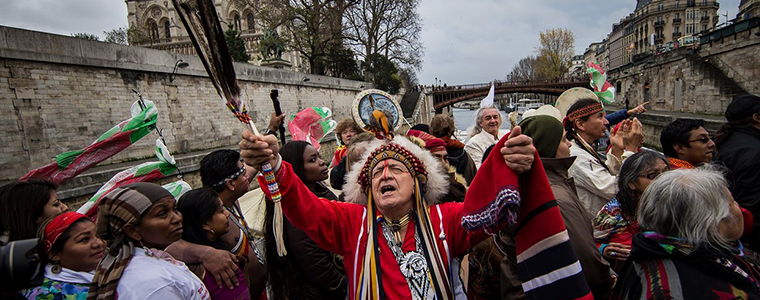 Indigenous representatives campaign to draw attention to the plight of tribes facing climate change at the conference in Paris last year. Indigenous representatives campaign to draw attention to the plight of tribes facing climate change at the conference in Paris last year.
 There are quite a few challenges that our society must face in the coming years, but there is one that we are already facing: Climate Change. Rising temperatures, increasingly weather events, sea level rise among others effects have become a daily reality for populations in urban centers. Additionally, the rapid urbanization is affecting the environment. Climate Change is a real threat and we must take action now.
On October 18th and 19th 2016, Haiti reached a milestone in its evolution towards the sustainable management of its natural resources.
In less than a month, about 10,000 participants, including representatives from country parties, observer countries, international organizations and other interested parties will meet in Cancun for the 13th meeting of the Conference of the Parties to the Convention on Biological Diversity (COP 13).
 We often ask ourselves, what do ecosystem services have to do with transportation? At the IDB, when we hear that the Environment, Rural Development, Disaster Risk Management Division (RND) has a program to mainstream biodiversity and ecosystem services into productive sector and
 Four years ahead of schedule, the Paris climate change agreement is expected to enter into force next month. Latin American and Caribbean countries played a major role in the diplomatic push to secure the agreement and are now making progress on ratifying it.
The Argentinean province of San Juan is a land of deserts and mountains, surrounded by the high peaks of the Andes, the birthplace of the rivers that crisscross the region. This arid province, where rainfall is scarce--hardly reaching an annual average of 3.9 inches (or 100 millimeters)--depends upon snowmelt from the Andes for its water supply; this, in turn, depends upon total annual snowfall.
Moving towards the path of sustainable development is a great challenge. The Paris Agreement, the UN´s Sustainable Development Goals (SDGs) and the delivery of Intended Nationally Determined Contributions (iNDCs) by 197 parties to the UN Climate Convention all require a shouldering of responsibility for addressing climate change and improving human welfare. If temperature rise is to be kept to well below 2°C by the end of this century, the time to act in now.
After living in Jamaica for five years, every time I visit for work, I try to squeeze in whatever time I have to say hello to friends. On my last visit I was very fortunate to have meetings on both sides of the weekend allowing me to spend my off days in a familiar place with familiar people. My friends and I decided to take advantage of this rare opportunity and headed east to Hellshire, a popular Jamaican hang out spot along the coast known for its fresh fish and other seafood done to order.