Challenges of Caribbean water utilities in time of coronavirus
Water, Sanitation, and Solid Waste
Challenges of Caribbean water utilities in time of coronavirus
The water and sanitation utilities have stepped up to provide their services during the coronavirus pandemic to keep their citizens safe and healthy.
*By Evan Cayetano
It is without a doubt that in this time of the COVID-19 water utilities responsible for public water supply are under increasing pressure to continue to...
Apr 27, 2020
The water and sanitation utilities have stepped up to provide their services during the coronavirus pandemic to keep their citizens safe and healthy. *By Evan Cayetano It is without a doubt that in this time of the COVID-19 water utilities responsible for public water supply are under increasing pressure to continue to provide this critical service. Even without a pandemic, water supply for utilities across the Caribbean has been challenged. These challenges have been well documented in various studies on water supply and the water sector in the Caribbean. There are also many studies on this topic which that are being produced right now. Water supply is an essential service under the COVID-19 emergency, as part of the disaster response that all countries in the Caribbean have instituted. The call for adequate water supply is implicit in the call for the population to practice good hygiene, one of the most effective way to prevent new contagions along with practicing physical distancing. While communities that have not had reliable water supply are asking how can they comply with the requirement for good hygiene without this vital commodity, governments are increasing water trucking services and doing their best to give people assurance of water supply. But water trucking, while it is necessary to attend to immediate needs, is inefficient and costly. It is therefore critical for water utilities to improve the efficiency of their existing operations. It is also critical for governments, as per UN Resolution 64/292. “The human rights to safe drinking water and sanitation”, to provide for the financial support required to meet the needs of those in the population with unreliable and no service. Before the COVID-19 emergency, the Caribbean Water and Wastewater Association (CWWA), with assistance from development partners including the IDB, CBD, PAHO, UNEP and others had prepared the Regional Strategic Action Plan for the Water Sector in the Caribbean (RSAP). This document, adopted by the High-Level Forum of Ministers Responsible for Water at the 2019 CWWA Conference, was largely in response to the realities of climate change to improve resilience of the utilities’ water supply infrastructure. As mostly small island developing states (SIDS), Caribbean countries are impacted by climate change by reduced water resources due to longer drought periods, increased storms and hurricanes, saline intrusion into aquifers due to over abstraction and sea level rise. With COVID-19 now upon us, the CWWA is rising to the occasion and through its coordination mechanism is organizing to provide for support among utilities, sharing information and best practices, as well contemplating adjustments to the RSAP. Critical topics in a first dialogue held on April 3, 2020 include Personal Protective Equipment (PPE) Requirements, Availability and Preparation for an Outbreak in the Workplace; Good Hygiene and Sanitation for Workplace and Treatment Facilities, Including Housekeeping Protocols/Routines/Sanitizing; and Supply Chain Management of Treatment. Associated development partners are also involved with CWWA to understand the needs and to assist with development of strategies and capacity building interventions. This response has constituted an extraordinary effort, given the challenges that the water and sanitation sector faced before the pandemic. Those challenges include: i) aging equipment and pipes with limited renewal of the water supply infrastructure (most of the newer pipelines are associated with housing development extensions of the pipeline); (ii) lack of a comprehensive asset management strategy and lack of adequate maintenance resulting in water treatment plants and related production facilities operating below design capacity; (iii) unmetered consumption and (iv) high energy costs for most utilities. These problems have led to: (i) a gradual deterioration of the networks, with physical losses of production and high levels of Non-Revenue Water (NRW); (ii) unreliable supply, with significant shortfall in potable water supply during the dry periods; and (iii) low electromechanical efficiency of equipment, which, combined with the current operation and maintenance (O&M) practices and the high energy costs, increases operating costs. The main causes for these problems are: i) lack of preventive maintenance over assets critical for the operation; ii) lack of a long term strategy for optimizing the life cycle of the physical assets; iii) lack of processes and practices for operating and maintaining facilities; iv) lack of capacity building programs; v) inefficient data handling systems for operation monitoring; and vi) lack of institutional learning strategies. Underlying these causes are also critical governance issues. Given all these challenges, the Caribbean is doing its best to provide the services needed to keep citizens safe and healthy.The critical role of the general population is very much recognized and the CWWA, with support of its partners, are committed to public messaging to improve the publics’ understanding of the issues affecting the water sector in general, and particular focus on improving the efficiency of water supply in this time. *Evan Cayetano is a water and sanitation specialist with the IDB since 1997. He has prepared and supervised loans and technical cooperation grants in the water sector for The Bahamas, Barbados, Jamaica, Suriname and Trinidad and Tobago and Guyana. He is the Team Leader for the ongoing Regional Strategic Action Plan for the Water Sector in the Caribbean to Develop Resilience to the Impacts of Climate Change (RSAP) and the focal point for the IDB Water and Sanitation Division for the Caribbean. Mr. Cayetano holds a M.Sc. in Coastal Zone Management from Florida Institute of Technology, a B.Sc. in Marine Biology from Texas A&M University.

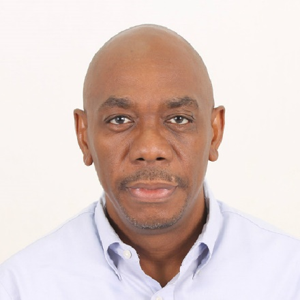 *Evan Cayetano is a water and sanitation specialist with the IDB since 1997. He has prepared and supervised loans and technical cooperation grants in the water sector for The Bahamas, Barbados, Jamaica, Suriname and Trinidad and Tobago and Guyana. He is the Team Leader for the ongoing Regional Strategic Action Plan for the Water Sector in the Caribbean to Develop Resilience to the Impacts of Climate Change (RSAP) and the focal point for the IDB Water and Sanitation Division for the Caribbean. Mr. Cayetano holds a M.Sc. in Coastal Zone Management from Florida Institute of Technology, a B.Sc. in Marine Biology from Texas A&M University.