
At the beginning of a project, we ask ourselves how it will improve the lives of beneficiaries. When these beneficiaries will be Indigenous Peoples, we also ask ourselves how development benefits and opportunities should be promoted in a culturally appropriate manner. This is precisely one of the objectives of the Environmental and Social Performance Standard on Indigenous Peoples (ESPS 7) of the IDB’s new Environmental and Social Policy Framework (ESPF). ESPS 7 establishes respect for the rights of Indigenous Peoples and seeks to avoid, minimize and/or compensate the project’s adverse impacts and risks. It also recognizes that they can be particularly vulnerable if their lands and natural resources are affected, or if their culture is threatened.
To help you understand what ESPS 7 entails, wethoughtwe wouldshare a fictional example of its implementation.Saidprojectaims to increase the productivity of the agricultural sector in the region, maintaining and promoting the sustainable use of natural resources. The project includes the construction of a research centerto developpilot programs and incentivesto adoptnew technologies for small and medium farmers. It also includes training forthesefarmers andfortechnicalpersonnelfrom governmentsectorentities.
As part of the project’s environmental and social assessment prepared by the executing agency, with support from the IDB, we identified that the region’s population is 30% Indigenous, most of whom could be potential beneficiaries of planned activities. We also identified that an Indigenous community uses natural resources within the project’s area and adverse impacts, such as loss of access or restrictions on land use, could occur. Therefore, we carried out a sociocultural analysis. Among other aspects, this analysis included:
- The characterization of theIndigenousPeople
- The identification of risks and potential direct, indirect,and cumulative adverse impacts and their mitigation and/or compensation(culturally appropriate)measures, as well as the positive impacts
- A culturally appropriate,meaningfulengagementplan, withfree,prior,andinformed consent(FPIC), if necessary. In this case, due to the existence of thisIndigenouscommunity, we requiredthe FPIC.
Free, prior, and informed consent (FPIC)
The FPIC is one of the main incorporations of the new ESPF, given it is not expresslystatedin the current Indigenous Peoples Policy (OP-765).It does, however,consider that,if there aresignificant adverse impacts affecting the physical, territorial,or cultural integrity ofIndigenousPeoples, agreements must bemade onthe operation andonmeasures to managethoseimpacts.
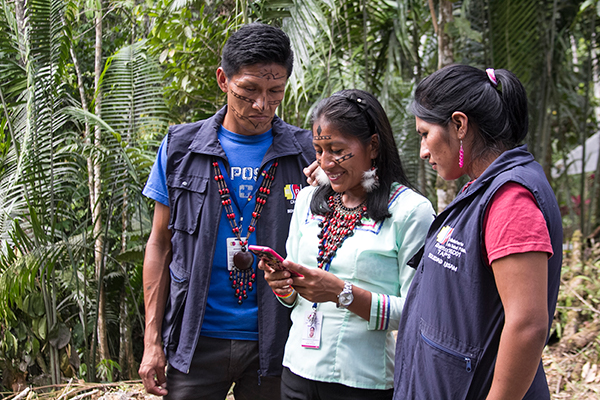
TheFPICbuildsonand expands the consultation andengagementprocess and is established through good faith negotiations between the executing agency andthe Indigenouscommunities.Here consent refers tothe collective support ofIndigenous Peoplesto carry out the project activities that affect them,reachedthrough a culturally appropriateprocessthat isrespectful of theircustomarydecision-making process andgovernance structure. It is required if there isany of these circumstances:
- Impactson lands and natural resources traditionally owned or used by the community,
- Relocation ofIndigenous Peoplesfromlands andnatural resourcestraditionally owned or used, or
- Significant impactsontheircultural heritage
TheFPICapplies toprojectdesign, implementationandexpectedoutcomesrelatedtoimpactsaffecting the Indigenous communities. In thisFPIC process, we consideredthe followingaspects, among others:
- The consultations were carried out in theirlanguage
- They were adequately informed before the meetings inaculturally appropriate format and language to ensure that everyone understood the projectand itsenvironmental and socialassessmentbefore participating in thediscussion
- Theircustomarydecision-makingprocess andstructure
As part of the FPIC process,we reachedcertain agreements. Forinstance:
- Relocation of the research center to an accessible area, in which only a minor part of the project overlaps with the area used by the community, in accordance with their preference
- The research center’s construction hours were adjusted to the community’s use of the area
- Collaboration with a community committee to design trainings and for conducting participatory monitoring during construction and operation phases
This process and agreements were properly documented.
Results
Given we were able to identify the Indigenous community within the project area and others in the region as potential beneficiaries in a timely manner, we were able to implement early on the requirements of the new framework’s ESPS 7.
The results of the sociocultural analysis and the FPIC process contributed to a better design and to the development of a robust and culturally appropriate Indigenous Peoples plan. A stakeholder engagement process was established that covered from the design of project activities to their implementation and closure, while empowering the communities. Regarding the project, community members increased the productivity of their land thanks to improved technology and training. Likewise, they incorporated community practices and traditional knowledge into the research center's pilot programs.
In additiontowhat we have explained thus far,ESPS7alsohighlights the special conditions of certainIndigenous Peoples, such astransborderpeoples and those inisolation and initial contact.Similarly,itstressesthe importance of an early, continuous,and culturally appropriateengagementwithIndigenousPeoples.
The ESPF systematizes socio-environmental management in a single framework and aligns the IDB with international best practices. To achieve compliance with its requirements and objectives, we suggest you start familiarizing yourself with it and identifying what aspects are new. The IDB, as part of the implementation of the new ESPF, will be developing trainings and capacity building activities for its personnel and for executing agencies, to whom the requirements of the different ESPSs are addressed.
We encourage you to review the new ESPS on Indigenous Peoples and tell us what aspects you consider most relevant for the preparation and supervision of projects.
This blog post is part of a series about the IDB‘snew Environmental and Social Policy Framework (ESPF). You may also want to read:
Three things you need to know about the IDB’s new Environmental and Social Policy Framework