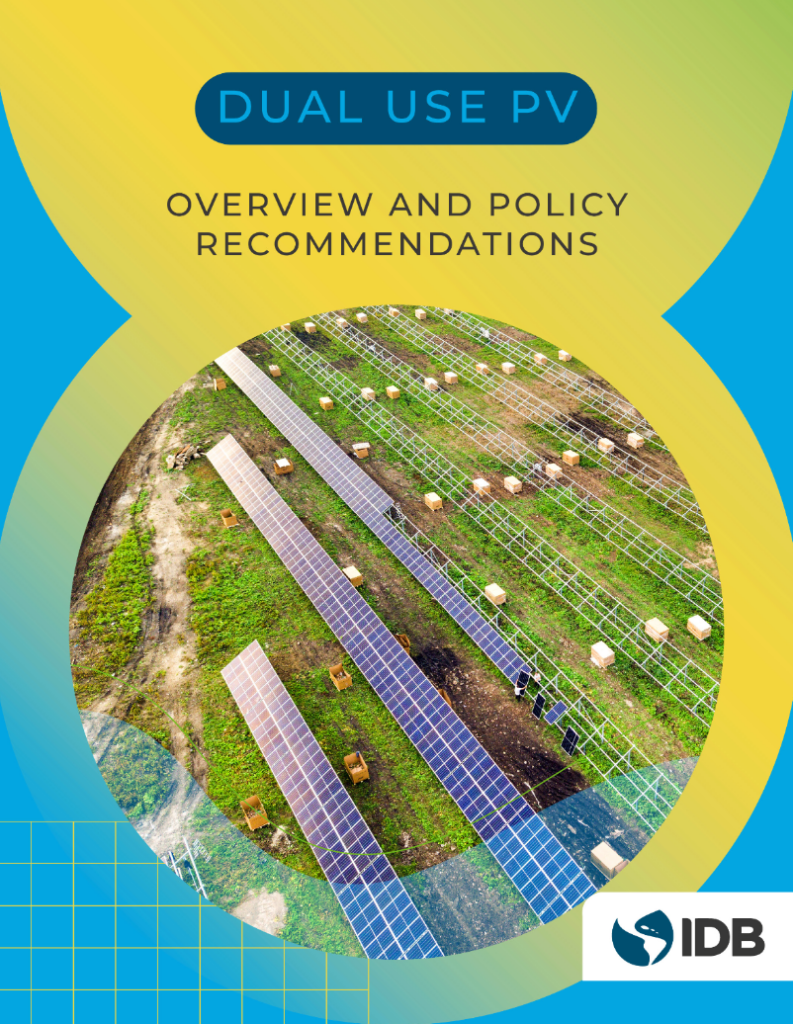
As the world accelerates its transition to renewable energy, finding ways to balance growing energy demands, land-use constraints, and goals for sustainable agricultural practices is important. Dual-use photovoltaic (PV) systems offer an innovative solution by integrating solar panels with existing land or infrastructure. This innovative approach enables simultaneous land use or energy production alongside essential activities such as farming, water management, and urban infrastructure.
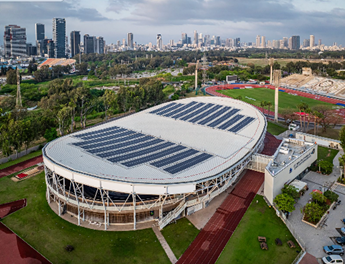
Flexible solar panel on a stadium rooftop. Credit: Apollo Power
Dual-use PV technology is versatile, enabling installation on rooftops, agricultural fields, water reservoirs, highways, and more. This approach not only minimizes land-use conflicts but also provides additional benefits. For example, agrivoltaic systems enhance crop yields while generating clean energy, while floating photovoltaics on reservoirs reduce water evaporation and optimize solar power generation.
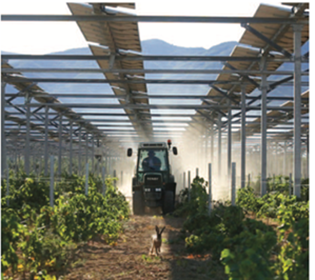
Elevated PV arrays in agri-pv. Credit: SolarPower Europe
Beyond environmental advantages, dual-use PV systems can also drive economic growth by creating jobs in installation, maintenance, and research and development. These systems also enable more resilient energy systems by decentralizing power generation and reducing dependence on large, centralized power plants.
In Latin America and the Caribbean (LAC), given its abundant agricultural land and water bodies, dual-use PV holds immense potential. Studies suggest that agrivoltaic systems in the region could generate 4,000 GW of power while floating photovoltaics near hydropower has the potential to supply up to 70% of energy needs. However, the adoption of these technologies remains underutilized due to barriers such as high capital costs, insufficient policy frameworks, and limited awareness.
A recent publication of the InterAmerican Development Bank titled Dual Use PV: Overview and Policy Recommendations offers unique insights and added value to the discourse on dual-use PV systems, including:
- Innovative photovoltaic systems: The publication introduces frameworks for integrating solar energy into complex infrastructure, such as urban rooftops, highways, agriculture, and water bodies. Through detailed case studies and simulations, the environmental and economic benefits of these dual-use PV technologies are quantified.
- Localized Solutions for LAC: Addressing Latin America and Caribbean challenges, the publication provides tailored strategies for overcoming economic and regulatory barriers, improving limited grid connectivity, and adapting new technologies to local conditions.
- Comprehensive Policy Roadmaps: Beyond technical feasibility, the publication emphasizes a cohesive approach to policymaking, sugge