
- A well-managed transition of government can strengthen the continuity of the state and reduce the risk of disruptions in public policies and essential services.
- Government transitions do not begin with the inauguration; they include key stages before the election, during the transition period, and in the first few months of the administration.
- The publication Managing and Communicating Government Transitions: A Practical Toolkit brings together comparative experiences and practical lessons to support governments in Latin America and the Caribbean.
Every change in government tests the state’s ability to maintain public policies, essential services, and institutional stability. Within a matter of weeks, governments must reorganize their political and managerial teams, transfer critical information, and set new priorities, while citizens, markets, and other stakeholders look for signs of continuity and predictability.
In Latin America and the Caribbean (LAC), where changes in government are becoming increasingly frequent, government transitions pose a growing challenge to democratic governance and the effectiveness of the state. A poorly managed transition can lead to operational disruptions, a loss of institutional capacity, and uncertainty regarding the continuity of public policies.
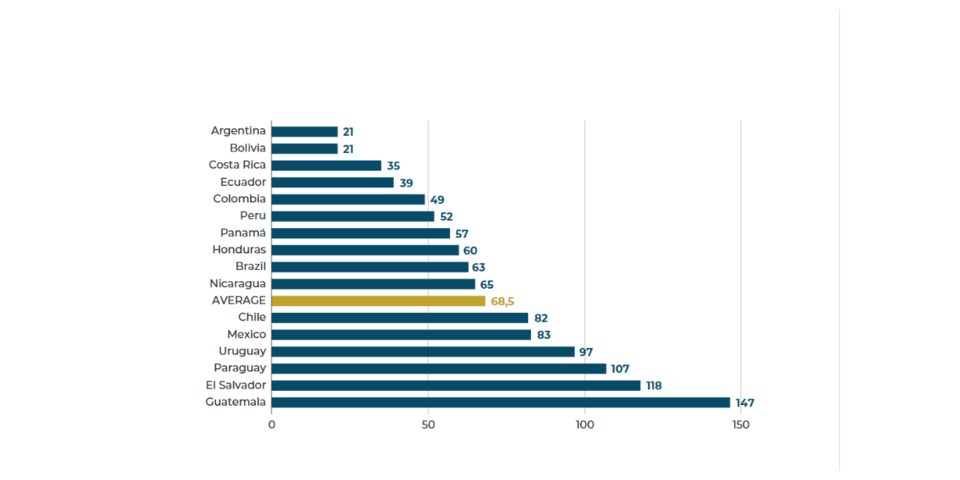
Regional experience shows that these processes require much more than administrative changes. They also require institutional capacity, coordination between outgoing and incoming teams, and mechanisms to preserve information, knowledge, and critical state functions during the change of government.
To support LAC countries, we have published “Managing and Communicating Government Transitions: A Practical Toolkit”, which offers a practical guide that brings together tools, processes, and comparative experiences to strengthen government transitions.

What Happens Before, During, And After a Change in Government
A government transition is not limited to inauguration day. It is a process that begins before the election and continues through the first few months of a new administration’s term.
Generally speaking, transitions include three main stages:
• The first stage occurs before the election and focuses on the orderly winding down of the outgoing government and the preparation of key information for the incoming administration. During this phase, administrations can begin organizing strategic data, documenting progress, identifying critical processes, and preparing institutional handover mechanisms.
• The second stage takes place between the election and the inauguration. This is the “transition” period between the two teams and typically involves fundamental decisions: reviewing management systems, identifying immediate priorities, forming teams, and defining the initial coordination and decision-making mechanisms.
• The third stage corresponds to the start of the new administration, typically associated with the first 100 days in office. During this period, institutional structures are consolidated, political and managerial appointments are finalized, and the new administration’s initial priorities are implemented.
How these stages are managed can make a significant difference in the continuity of public policies and in a new administration’s ability to begin its term on a stronger footing.

Four Goals for a Successful Transition
Beyond differences between countries, the experiences analyzed show that government transitions typically pursue four central objectives:
1. Ensuring the continuity of government operations and long-term public policies.
2. Building trust and predictability for citizens and other stakeholders.
3. Facilitating the early implementation of the new government’s priorities.
4. Promoting mechanisms for cooperation between outgoing and incoming administrations.
An Opportunity to Strengthen the Continuity of the State
When these elements are absent, the risks of operational discontinuity, loss of strategic information, and weakening of state capacities increase.
Government transitions will continue to be one of the most complex challenges for public administration. But they can also become an opportunity to strengthen state capacities, preserve public policies, and build public trust in democratic institutions.
Comparative experience shows that having clear processes, coordination mechanisms, and management tools can make a significant difference in ensuring the continuity of the state and in a new government’s ability to begin its term on a stronger footing.
Download the guide to learn about experiences, tools, and practical lessons on government transitions in Latin America and the Caribbean.
Keywords:
Government