story
Availability of quality data is essential to solving environmental problems and monitoring impacts. Furthermore, ecosystem service analysis, which is used more and more to address environmental management challenges, is often data intensive, requiring information from multiple sectors, at different scales, and with spatial and temporal qualities. Unfortunately, collecting primary data is often costly and labor intensive, resulting in a shortage of such information.
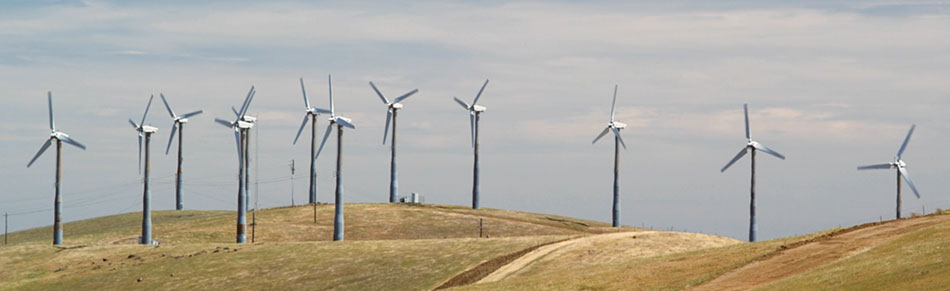 May 13, 2015 marked the first year of the enactment of Law 1715 of 2014, which established the legal framework for the integration of non-conventional renewable energy (FNC) to the Colombian energy system in order to promote the development and the use of these sources. Colombia has a clean electricity generation matrix, and about 68% of its installed capacity comes from small and large scale hydropower. However, this dependence on water resources creates a vulnerability to climatic events.
 Daily, millions of homes in Latin America and the Caribbean lose energy in the process of cooling or heating. In the case of dry climates, as in